Your engine depends on precise timing every time it runs. Even a small loss of synchronisation between the crankshaft and camshaft can affect engine performance and, in some engines, lead to serious internal damage. A timing belt or timing chain helps maintain this synchronisation so the valves and pistons move at the correct time.
From frequent stop-start driving through Stafford and Kedron to longer trips from Everton Park across Brisbane, your engine’s timing system is constantly at work. Yet because it operates largely out of sight, many drivers may not think about whether their vehicle uses a belt or chain until servicing or a problem brings it to their attention.
While both perform essentially the same function, the timing belt vs timing chain difference matters when it comes to construction, lifespan and maintenance. In this guide, we’ll explain how each works, how to find out which one your car has, the warning signs to watch for and when professional attention may be needed.
What Does Your Car’s Timing System Actually Do?
Your car’s timing system keeps the crankshaft and camshaft working in sync. This ensures the engine’s valves open and close at the correct time as the pistons move through each stage of the combustion cycle.
The main parts involved are:
- Crankshaft: Converts the pistons’ motion into rotation that ultimately drives the vehicle.
- Camshaft: Controls the opening and closing of the engine’s valves.
- Timing belt or chain: Connects and synchronises the crankshaft and camshaft.
In a four-stroke engine, the camshaft typically completes one rotation for every two rotations of the crankshaft. This precise relationship is why engine timing matters. If the components fall significantly out of sync, the engine can run poorly, fail to start or, in some engine designs, suffer internal damage.
With the engine timing system explained, we can now look at the two components that commonly keep everything synchronised: the timing belt and timing chain.
What Is a Timing Belt?
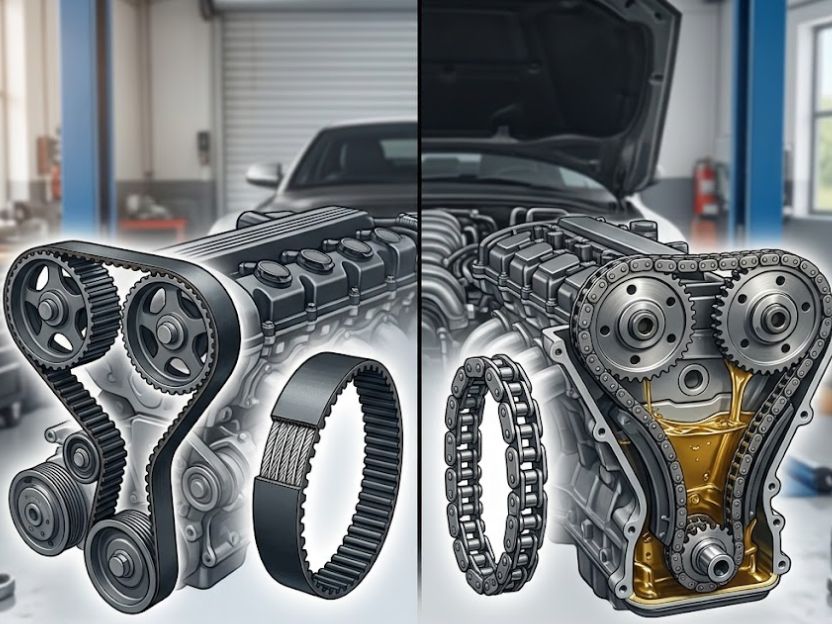
A timing belt is a toothed belt that keeps the crankshaft and camshaft synchronised while the engine is running. It is typically made from reinforced rubber-based materials, with precisely spaced teeth that help maintain correct engine timing.
Unlike a timing chain, a timing belt is generally a scheduled maintenance item. Manufacturers specify replacement intervals based on kilometres travelled, vehicle age, or both.
Typical characteristics include:
- Quiet operation
- Lightweight construction
- No engine oil lubrication for conventional dry timing belts
- Scheduled replacement intervals
- Gradual deterioration from age, heat and use
What Are the Signs of a Worn Timing Belt?
A worn timing belt does not always provide an obvious warning before it fails. This is why the manufacturer’s replacement schedule remains one of the most important indicators that a belt needs attention.
Where deterioration is detectable, signs of a worn timing belt may include:
- Cracks or fraying
- Worn or damaged teeth
- Oil contamination around the belt
- Difficulty starting or poor engine operation if timing has been affected
Because most timing belts sit behind protective covers, these problems may not be visible during everyday driving. Waiting for symptoms is therefore not a substitute for replacing the belt at the recommended interval.
What Is a Timing Chain?
A timing chain performs the same basic function as a timing belt, keeping the crankshaft and camshaft synchronised. The key difference is that it uses a metal chain and typically operates inside the engine, where it is lubricated by engine oil.
Timing chains work alongside components such as guides and tensioners, which help keep the chain correctly positioned and tensioned as the engine runs.
Typical characteristics include:
- Durable metal construction
- Lubrication from engine oil
- Longer service life than timing belts in many applications
- No fixed replacement interval on many vehicles
- Guides and tensioners that can wear over time
How Long Does a Timing Chain Last?
A timing chain typically lasts 240,000 to 320,000 km, and in some vehicles, it may last the life of the engine. Unlike timing belts, many manufacturers do not specify a routine replacement interval.
Its lifespan depends on factors such as engine design, oil quality, servicing history and wear in the guides or tensioners. Poor lubrication or delayed oil changes can accelerate wear and shorten the chain’s service life.
What Are Common Timing Chain Noise Symptoms?
Unlike timing belts, timing chains can sometimes provide an audible indication that something is wrong. Common timing chain noise symptoms include a rattling or metallic noise from the engine, particularly during startup.
Other possible signs include:
- Engine warning lights
- Rough or uneven running
- Difficulty starting
- Reduced engine performance
These symptoms can have several possible causes, so a rattling engine does not automatically mean the timing chain is worn. Unusual timing-related noises should be properly diagnosed rather than relying on sound alone.
Comparing Timing Belts and Timing Chains
While both components keep the engine correctly timed, they differ in how long they last, how they are maintained and when they typically need replacement.
Here is the timing belt vs timing chain difference at a glance:
Feature | Timing Belt | Timing Chain |
Material | Reinforced rubber-based material | Metal |
Lubrication | Usually operates dry | Lubricated by engine oil |
Typical lifespan | Around 100,000–160,000 km | Around 240,000–320,000 km or potentially longer |
Replacement | Usually scheduled | Often replaced based on condition |
Operation | Generally quieter | Can become noisy as components wear |
Maintenance | Follow manufacturer replacement interval | Regular oil servicing is particularly important |
Which Cars Have Timing Belts and Which Have Timing Chains?
There is no simple rule based on the car brand alone. Whether your vehicle has a timing belt or chain depends on the specific model, model year and engine variant. The same manufacturer, and sometimes even the same model, can use different timing systems across its engine range.
Even with that information, it can still be difficult to tell which one your car has. The timing system is usually covered, so it is not something you can reliably identify simply by looking under the bonnet.
The most reliable ways to find out are:
- Check the owner’s manual or service schedule for information on the timing system or a specified timing belt replacement interval.
- Review the service history: Previous invoices may record a timing belt replacement or work involving a timing chain, guides or tensioners.
- Check the exact engine specifications: Manufacturer information for your particular engine variant may identify whether it uses a belt or chain.
- Use the VIN or engine code: A dealership, manufacturer or mechanic can use these details to identify the system fitted to your specific vehicle.
- Ask a mechanic: If the documentation is unclear or covers multiple engine variants, they can confirm which engine your vehicle uses.
Knowing this is particularly useful when buying a used car. A timing belt may have an upcoming scheduled replacement cost, while a timing chain generally follows a different maintenance approach. Establishing which system the vehicle has and checking its maintenance records gives you a clearer picture of what may be required after purchase.
How Can You Look After Timing Belt or Timing Chain?
Good maintenance means treating a timing belt and timing chain according to how each system wears. A belt has a finite service interval, while a chain depends heavily on proper lubrication and the condition of its supporting components.
That difference changes what you need to pay attention to during routine maintenance. For a timing belt:
- Replacement timing: Follow the manufacturer’s specified time or kilometre interval rather than waiting for symptoms.
- Related components: Have the tensioners and pulleys inspected when the belt is replaced.
- Water pump: If driven by the timing belt, check whether replacement at the same time is recommended.
- Fluid leaks: Repair oil or coolant leaks that could contaminate the belt.
For a timing chain:
- Oil specification: Use the engine oil grade and specification recommended by the manufacturer.
- Oil servicing: Keep oil and filter changes on schedule to maintain proper lubrication.
- Developing noise: Have rattling on startup or new timing-system noises investigated.
- Guides and tensioners: Address wear before it affects the chain’s operation.
Why Choose Alpine Car Care for Timing Belt and Chain Services?
components are built. It also determines when replacement may be required, which related components need to be checked, and how potential problems are diagnosed. Correctly identifying the timing system is therefore important before any work is recommended.
If you need a timing belt mechanic in Brisbane, Alpine Car Care provides timing belt and timing chain services across a wide range of makes and models. Our experienced technicians use modern workshop equipment and genuine and premium parts when completing repairs and replacements.
From our Stafford workshop, we are conveniently located for motorists in Kedron, Everton Park, and the surrounding Brisbane areas. Whether your belt is approaching its replacement interval, you have noticed possible chain problems, or you are unsure which system your car uses, our team can assess your vehicle and recommend the appropriate next step.
Contact us today to book your timing system inspection, service or replacement.
FAQs
Is timing belt replacement more urgent than timing chain replacement?
Usually, yes. Timing belts have scheduled replacement intervals and should be replaced when due. Timing chains often have no scheduled interval, but any rattling or other signs of wear require prompt inspection.
How much does timing belt replacement typically cost compared to a timing chain repair?
In Australia, timing belt replacement typically starts around $550 and can exceed $1,300, while timing chain replacement averages about $1,200 to $2,000+. The actual cost depends on the vehicle and engine.
Does a timing chain need regular maintenance?
The chain itself typically has no separate routine maintenance schedule, but it relies on clean engine oil for lubrication. Following the correct oil and filter service intervals helps protect the chain, guides and tensioners.
Why do some cars use timing belts while others use timing chains?
It comes down to engine design and manufacturer priorities. Timing belts are lighter and quieter, while timing chains generally offer a longer service life but require lubrication and can be more complex to replace.
Do all petrol and diesel engines have a timing belt or a timing chain?
No. While many engines use a timing belt or chain, some designs use other systems, such as timing gears. The system fitted depends on the specific engine design and manufacturer.