Table of Contents
- What is a Wheel Bearing and Why is it Important?
- What Causes a Wheel Bearing Noise While Driving?
- Why is My Car Making a Humming Noise When Driving?
- How Can You Tell Which Wheel Bearing is Bad?
- Is a Wheel Bearing Dangerous If Ignored?
- What Happens During Wheel Bearing Repair?
- Fix All Types of Wheel Bearing Issues with Alpine Car Care
- FAQs
Wheel bearing noise while driving is commonly caused by wear, loss of lubrication, damaged bearing surfaces, contamination, or impact damage around the wheel and hub assembly.
A failing bearing often creates a humming, rumbling, growling, or grinding sound that becomes more noticeable as vehicle speed increases. Because wheel bearings help wheels rotate smoothly and support vehicle loads, deterioration should not be ignored.
If an unusual wheel-related noise develops, arranging a professional inspection can help identify whether the bearing or another tyre, brake, or suspension component is responsible.
What is a Wheel Bearing and Why is it Important?
A wheel bearing is a precision component located within or connected to the wheel hub assembly. It allows the wheel to rotate with minimal friction while supporting the loads applied to it.
Depending on the vehicle design, the bearing may be a serviceable component in its own right or incorporated into a sealed hub assembly.
Wheel bearings operate every time your vehicle moves. They must cope with vehicle weight, cornering forces, road impacts, and changing driving conditions.
What Causes a Wheel Bearing Noise While Driving?
There is no single cause of wheel bearing noise. Bearings can deteriorate due to normal wear, damaged seals, contamination, poor lubrication, installation issues, or severe road impacts.
Loss of Lubrication
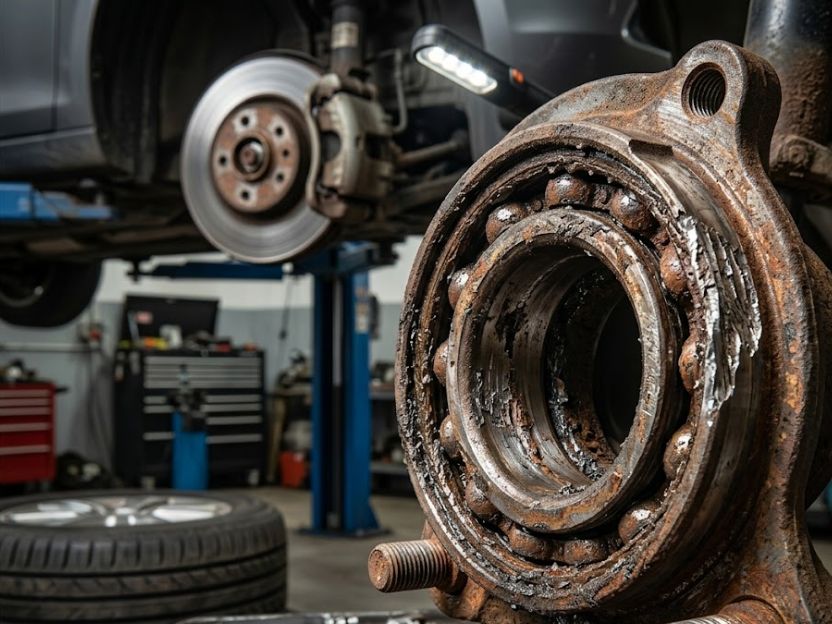
Bearings rely on lubrication to reduce friction and heat between moving surfaces. Many modern wheel bearings are sealed units containing grease. If a seal becomes damaged or the grease deteriorates, internal friction can increase.
This may contribute to:
- Humming
- Rumbling
- Growling
- Grinding
- Excessive heat around the affected hub
Normal Wear Over Time
The bearing’s internal rolling elements and raceways are manufactured to close tolerances. As these surfaces deteriorate, smooth movement can give way to vibration and noise. There is no universal distance at which every wheel bearing fails. Vehicle design, bearing quality, driving environment, and maintenance history all influence service life.
Potholes and Heavy Road Impacts
A severe pothole strike, kerb impact, or similar shock can transfer substantial force through the tyre, wheel, hub, and suspension. Damage can sometimes develop progressively, making it worthwhile to have persistent new noises checked after a significant wheel impact.
Incorrect Installation
Wheel bearing replacement requires correct procedures and specifications for the particular vehicle. Incorrect installation techniques, contamination during assembly, or incorrect fastener torque can contribute to premature component problems. For this reason, bearing replacement is generally best handled by an appropriately equipped automotive technician.
Why is My Car Making a Humming Noise When Driving?
Humming can also be associated with:
- Uneven or cupped tyre wear
- Aggressive tyre tread patterns
- Incorrect tyre pressures
- Wheel or tyre damage
- Driveline components
- Brake-related problems
- Other rotating components
How Can You Distinguish Tyre Noise from Bearing Noise?
Tyre noise often varies with the road surface, whereas bearing-related noise may be more consistently related to vehicle speed or to changes in load while cornering. A mechanic in Stafford can inspect the tyres, wheels, bearings, brakes, and suspension before recommending repairs.
How Can You Tell Which Wheel Bearing is Bad?
Sound and vibration can travel through the suspension, chassis, and body of a vehicle, making a noise from one area appear to originate somewhere else.
A technician may use a combination of:
- Road testing
- Tyre inspection
- Wheel movement checks
- Bearing rotation checks
- Hub and suspension inspection
- Comparison between wheels
- Workshop diagnostic equipment where appropriate
Professional diagnosis is useful because replacing a wheel bearing based solely on where the driver hears the sound could lead to unnecessary repairs.
Is a Wheel Bearing Dangerous If Ignored?
The level of risk depends on how badly the bearing or associated components have deteriorated. A wheel bearing contributes to the proper rotation and support of the wheel assembly. Continuing to operate a vehicle with a seriously defective bearing can potentially affect handling and damage surrounding components.
Queensland legislation defines a light vehicle as defective where, among other circumstances, a component cannot reasonably be relied upon to perform its intended function, or the vehicle/component is unsafe. Queensland rules also prohibit driving a defective light vehicle on a road, subject to specified exceptions.
Queensland Government guidance further explains that a vehicle considered dangerous during a roadside inspection can be ordered off the road immediately and may need to be transported by tow truck or trailer.
How Long Can I Drive with a Bad Wheel Bearing?
There is no reliable universal distance or number of days that it is safe to drive with a bad wheel bearing.
Bearing deterioration varies substantially between vehicles. A minor noise may remain relatively stable for some time, while another bearing may worsen more quickly.
When Should You Stop Driving?
Seek prompt professional advice if the vehicle develops symptoms such as:
- Severe grinding or rumbling
- Noticeable wheel looseness
- Strong vibration
- Unusual steering behaviour
- Significant handling changes
- A wheel or hub area that appears abnormally hot
- A rapidly worsening noise
What Happens During Wheel Bearing Repair?
A typical wheel bearing repair in Brisbane may involve:
- Confirming the source of the noise.
- Removing the wheel and necessary brake components.
- Accessing the hub or bearing assembly.
- Removing the defective component.
- Installing the correct replacement component.
- Reassembling components to the manufacturer’s specifications.
- Checking wheel operation and related components.
- Conducting a final test where appropriate.
Fix All Types of Wheel Bearing Issues with Alpine Car Care
At Alpine Car Care, we provide automotive servicing, diagnostics, and repairs from our Stafford workshop. Our services include advanced diagnostics, logbook servicing, brake repairs, engine diagnostics, and 4WD servicing. We focus on identifying the source of vehicle problems before recommending the appropriate repair.
If you’re looking for a mechanic in Stafford or need wheel bearing repair in Brisbane, our team can inspect unusual wheel noises and related vehicle components. From Stafford and Kedron to Everton Park and the surrounding Brisbane areas, we aim to help motorists keep their vehicles reliable and road ready.
If your car has started humming, growling, or grinding while driving, contact us to arrange an inspection before the problem worsens.
FAQs
Does the noise change when you turn left or right?
Yes. Wheel bearing noise can sometimes become louder or quieter when you turn because cornering shifts the vehicle’s weight from one side to the other. However, this is only a diagnostic clue. Tyres and suspension components can create similar changes in noise.
How do you know which wheel the bad bearing is coming from?
It can be difficult to identify the faulty wheel by sound alone because vibration and noise can travel through the chassis. A mechanic may use a road test, wheel movement checks, bearing rotation checks, and workshop inspection to confirm which wheel bearing is actually worn.
What causes a wheel bearing to wear out or fail in the first place?
Wheel bearings can wear out due to normal ageing, damaged seals, loss of lubrication, water or dirt contamination, repeated impacts from potholes, kerb strikes, or incorrect installation. Driving conditions, vehicle weight, component quality, and maintenance history can also influence how quickly a bearing deteriorates.
Can a bad wheel bearing cause vibration through the steering wheel or seat?
Yes. A badly worn wheel bearing can sometimes contribute to vibration felt through the steering wheel, floor, or seat, particularly as vehicle speed increases. However, tyre imbalance, wheel damage, suspension faults, and brake problems can produce similar symptoms, so the cause should be professionally diagnosed.
Could the humming noise be something else, like a tyre or CV joint, instead of a wheel bearing?
Yes. Humming or rumbling can also come from uneven tyre wear, tyre tread patterns, wheel damage, brakes, differential components, or other drivetrain parts. CV joints more commonly produce clicking or knocking noises while turning, but proper inspection is needed because vehicle noises can be difficult to pinpoint.
How much does it typically cost to replace a wheel bearing?
The cost varies significantly depending on the vehicle, whether the bearing is replaced separately or as a complete hub assembly, labour requirements, and whether other components are damaged. A mechanic in Stafford can inspect the vehicle and provide an accurate quote for the required repair.
Can a failing wheel bearing trigger the ABS warning light?
Yes, in some vehicles. The ABS wheel-speed sensor may be integrated into or positioned close to the wheel bearing or hub assembly. If bearing movement, sensor damage, or a damaged encoder ring interferes with the wheel-speed signal, the ABS warning light may illuminate. Diagnostic testing is needed to confirm the exact cause.